
What Does Impact Look Like?
Sometimes, It Looks Like Joy.

When we talk about the impact of education, we often reach for numbers. How many students are enrolled? How many children who once had no school within reach can now sit in a classroom each morning?
These measures matter. They help us understand whether opportunity is expanding and whether the resources entrusted to us are making a meaningful difference.
But during a recent Mona Foundation visit to our partners at Programme for Children (PFC) in Sierra Leone, Mona Advisory Board member Gordon Britton noticed something much harder to quantify:
Joy.
Gordon, a retired CEO, traveled alongside Mona Foundation president Mahnaz Javid, Global Program Officer Sophia Moser, and John Darvish, CFO for Holistique Group and a longtime Mona supporter. Their time with PFC took them from Freetown to Bo and then deep into rural Sierra Leone, where they visited Mona-supported schools and educational facilites in several villages..
Getting there was part of the experience.
As paved roads gave way to increasingly difficult routes into remote communities, the journey itself offered a glimpse of what distance can mean for children trying to reach school. Then, at the end of those long journeys, something striking happened. The team was met with celebration.
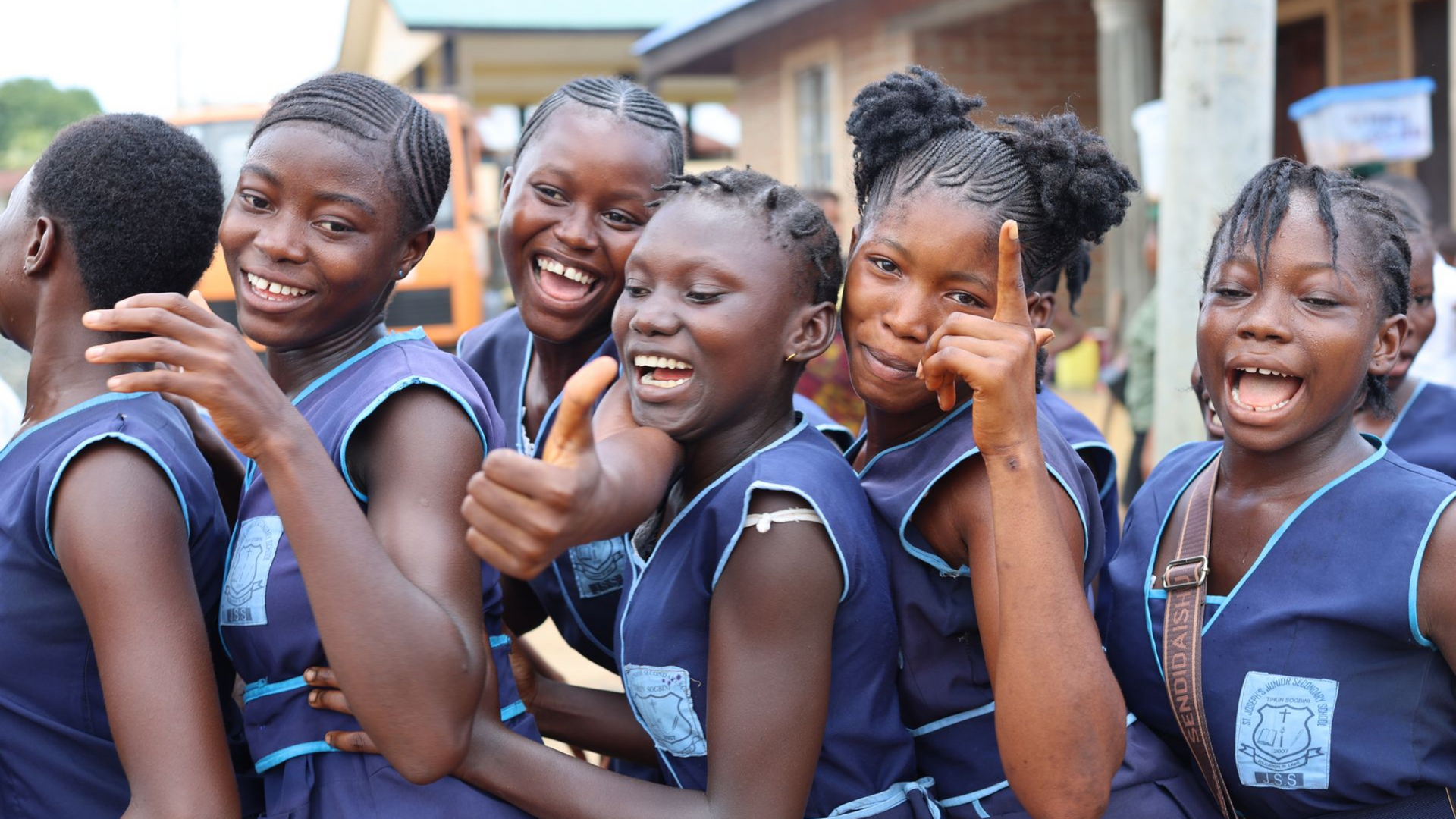
In village after village, children, parents, town chiefs, religious leaders, educators, and Ministry of Education representatives gathered to welcome them. There was music and dancing. Entire communities walked together toward schools they had helped bring into being. Sophia described what they encountered simply as “resounding community joy.”
Gordon was struck by the joy he encountered amid the very real challenges communities continued to face. The material hardship was unmistakable. So, too, were the collective pride, generosity, music, and celebration surrounding the schools.
His reflections raised a question that stayed with us long after the visit: WHAT IF JOY AND HAPPINESS ARE ALSO PART OF THE IMPACT OF EDUCATION?
To understand that joy, it helps to understand what the communities were celebrating.
Programme for Children works to improve access to education by building schools in remote rural villages. Rather than deciding what a community needs from the outside, PFC practices participatory, community-led development, working in collaboration with residents, local and religious leaders, and government agencies to expand educational opportunity.
Each has a role to play: communities help identify priorities and contribute land, labor, and local knowledge; PFC coordinates resources and construction; and the Ministry of Education supports the schools through certifying teachers and providing curriculum. Since 2019, Mona Foundation has collaborated with Programme for Children and local communities to build 8 schools, a community library, and a vocational training center each serving several villages.
During the visit, the Mona team saw the depth of that ownership firsthand. People spoke with pride about what they had contributed—from land and construction to uniforms and housing for teachers—and about what having a school now makes possible for their children.
Each school was a reflection of that shared effort and commitment to their children’s future.
And that helps explain the celebration.
"I Get to Go to School Every Day"
In Kpeyama, where a new primary school opened last year, the difference that having education close to home can make is especially striking.
Before the school was built, children faced a ten-mile daily journey to the nearest school. About half made the trip; the others weren't attending school at all because the distance was simply too great and too dangerous for young children.
The community had waited 124 years for a school of its own.
Today, every child in Kpeyama has the opportunity to attend school close to home.
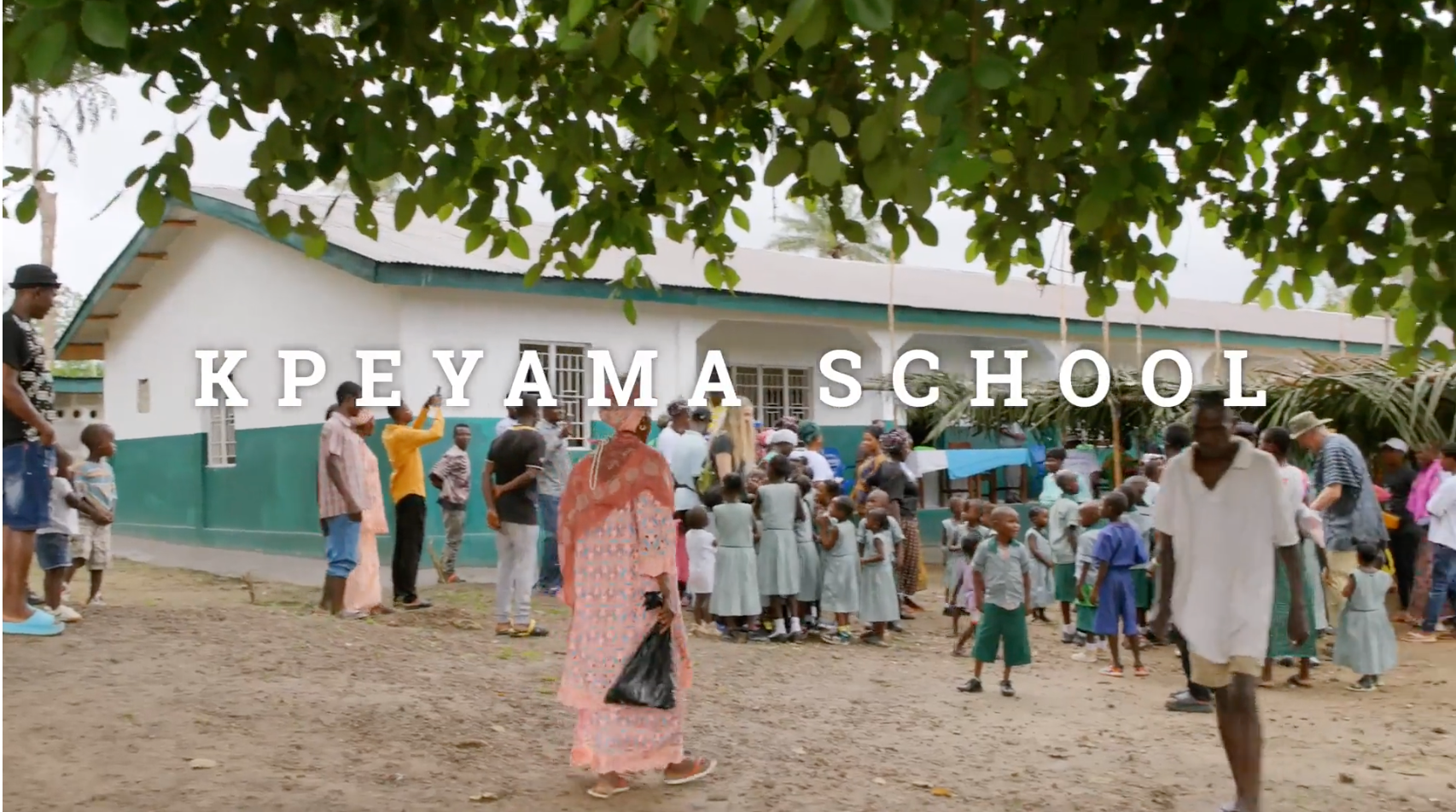
Before Kpeyama Primary School was built, children faced a 10-mile daily journey to the nearest school.
The community had waited 124 years for a school of its own.
In Tihun, home to another PFC school supported by Mona, a young girl captured what that kind of access can mean in just a few words. She walked up to Sophia, grabbed her hand, and proudly announced:
“I go to school!”
When Sophia told her how wonderful that was, she responded:
“Yes, I get to go to school every day!”
What can feel ordinary elsewhere was, for her, a source of unmistakable joy. The joy the Mona team encountered was not evidence that hardship had disappeared.
It was evidence that something had changed.
Reflecting afterward, Gordon connected the joy he witnessed with gratitude—the ability to recognize how far you have come rather than looking only at how far there is still to go.
Mahnaz heard that hope directly from parents, some of whom expressed that they could “die happy” knowing their children had a future.
Their happiness wasn't rooted in the idea that every challenge had been solved.
It was rooted in possibility.
And the hope Gordon witnessed was not passive optimism. As he reflected after the visit:
“Hope is not a feeling. Hope is action. Hope is a dream with action, with agency, with resources.”
Hope was taking tangible form: in classrooms, in children able to learn close to home, and in parents watching their children enter schools they had helped build.
And sometimes, it looked like an entire village dancing.

When Education Becomes A Catalyst
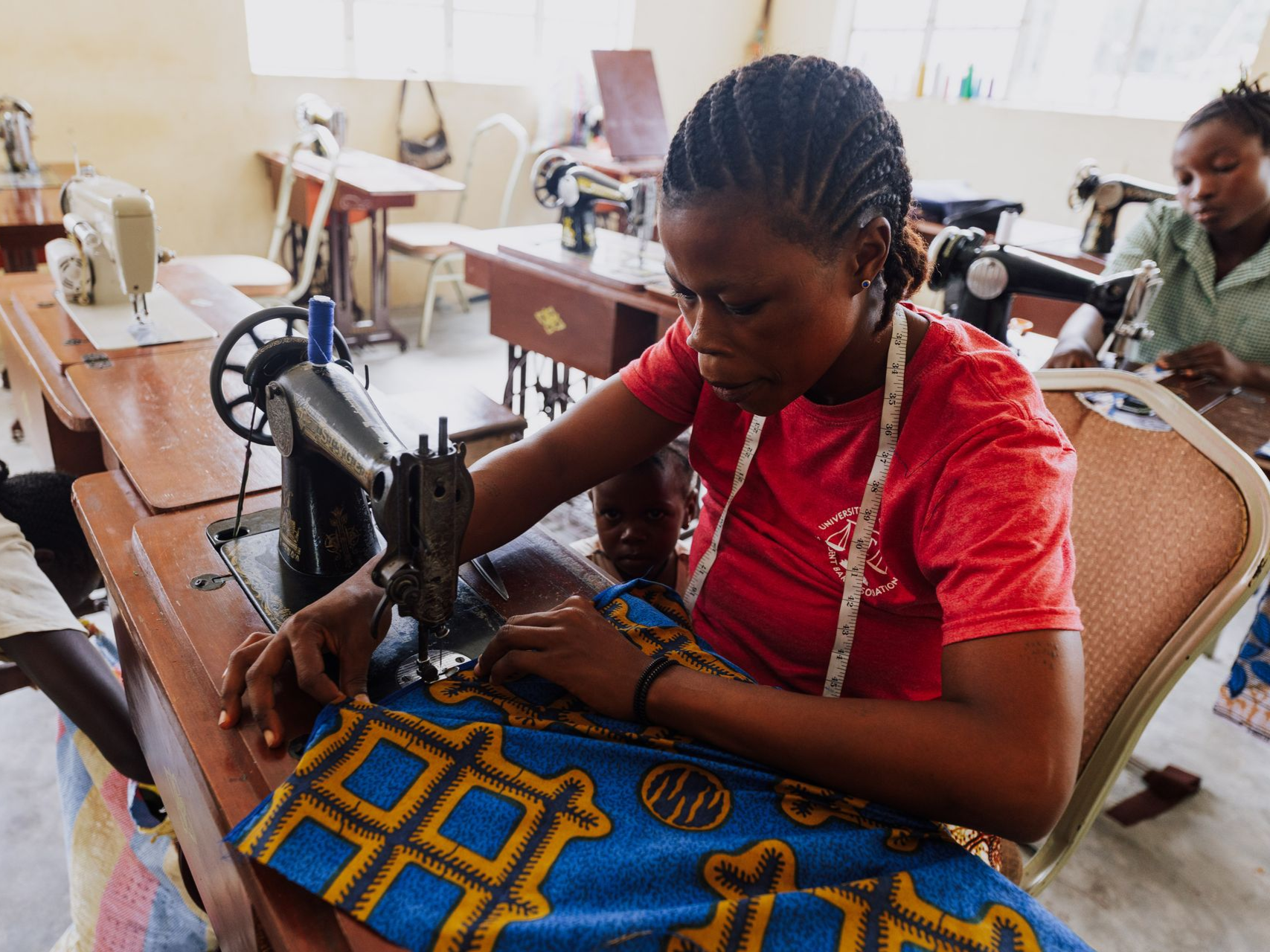
Back in Tihun, the impact of greater educational access is beginning to extend beyond the school itself.
The government is now constructing a bridge across a nearby river that community members currently cross by canoe or makeshift ferry, and paving a road that was previously nearly impassable. Both will improve mobility and connectivity, supporting greater economic activity and stronger connections with surrounding villages and towns.
At the Muloma Women's Technical Vocational Center, another Mona-supported project, that ripple effect has taken a different form. The center offers seven training tracks to 150 students, helps teachers from surrounding villages pursue certification, and is now enabling distance learning for students from two universities. Rooms originally created for vocational education are helping bring higher education closer to people who otherwise might have had to leave their communities to access it.
Together, these examples offer a glimpse of what can happen when a community gains an educational institution of its own—and begins building outward from it.
There is still tremendous need. Some villages remain without nearby schools. Children still travel long distances. Transportation and the cost of uniforms remain barriers for families. Some children need to work. Too many girls leave school before completing their education.
Joy does not erase those realities.
Perhaps that is precisely why Gordon's observation matters.
Programme for Children and the communities themselves bring the knowledge, leadership, commitment, and vision. Mona's role is to walk alongside them—bringing resources where they can be useful and remaining committed for the long term.
As Mahnaz reflected after returning home, “It is our honor to play a small role.”
We will continue to measure students reached, schools built, teachers trained, and educational outcomes.
But perhaps there is another sign of progress worth paying attention to, too.
The sound of a community celebrating a school it helped build. A child proudly saying, I get to go to school every day. A road and bridge taking shape beside a community that was once difficult to reach.
And the joy of knowing that the future holds possibilities that were not there before.